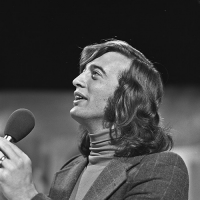
Daily Mail, May 22, 2012
He was the gaunt Bee Gee, the one with the tombstone teeth and extraordinary voice – a high, plaintive tenor which, when he was a boy, his parents would fondly describe as sounding like that of “a quavering Arab”.
But Robin Gibb’s voice and song writing abilities, when allied with the musical talents of his twin Maurice and older brother Barry, were to sell over two hundred and twenty million Bee Gees records in a career that was to last for nearly half a century.
As a song writing partnership, the Gibb brothers were prolific. Second only to Lennon and McCartney in their success, not only did they write and produce numerous hits for themselves, they also created hits for many other artists.
And although, after the death of Maurice in 2003, Robin never recorded with Barry again as a Bee Gee, he never stopped writing and recording, his most recent work being a requiem about the sinking of the Titanic. Composed and produced with his son from his second marriage, RJ Gibb, it was first performed by the Royal Philharmonic Orchestra and RSVP Choir in April of this year.
A complex, eccentric, often contradictory character, Robin Gibb, who has died aged 62, was a staunch supporter of Britain’s soldiers. Recording a special charity version of Gotta Get A Message To You with Soldiers for the Poppy Appeal last year, he was also a major supporter and fund raiser for the Bomber Command Memorial which is now under in London’s Green Park..
Robin was born 35 minutes before his twin Maurice in 1949 in Douglas, Isle Of Man. Barry was already three years old, and though, he would always be perceived as the leader, the strength of the Bee Gees partnership lay in their musical equality and closeness. They edited and complemented each other perfectly.
Their father, Hugh, the leader of a small seaside hotel band, never had much success, and, when, in 1955, his contract in the Isle of Man wasn’t renewed he moved the family back to his home town of Manchester. Surprisingly, although he was said to be an excellent pianist and drummer, he didn’t immediately spot his sons’ talents.
“One day our parents had been out together,” Barry once told me, “and as they were coming into the house they heard us singing in harmony. They thought the sound must be coming from the radio.”
“Neither of our parents were aware that we could harmonise instinctively,” Robin would explain. “The only thing my brothers and I cared about was composing. It was our hobby. We didn’t have any friends, or many other interests except music. In a way we were like the Brontes, complete in ourselves. We didn’t need outsiders. My father once said that composing was for other people. But it was normal to us. Composing made us happy. We loved it. It was never about money, it was about being recognised and liked.”
Starting as small boys in their bedroom, holding three hairbrushes to their mouths as pretend microphones, they were soon looking for places with an echo effect – they sound that Manchester’s public toilets were best for that.
And when they made their first public appearance at a children’s competition one Saturday morning at the Gaumont Cinema in that city in 1957, Robin and Maurice were only eight. They’d planned to mime to an Everly Brothers record, but having dropped and broken it on their way to the cinema, they decided to sing live instead.
Other children’s venues followed but in 1958, with father Hugh still seeking his big break, the family emigrated to Australia. His break never came, but within months his sons were singing regularly on a local radio station in Brisbane. A year later they were appearing on television. Records followed.
In 1963 both Robin and Maurice left school – having fibbed about their age, outrageously young. They were not quite fourteen. Already professional musicians they wrote, played and sang continually, but it wasn’t until they were working their passage (by singing) on a ship back to the UK in October 1966 that they had their first Australian hit, Spicks And Specks. It was too late to turn round.
In London they wrote to the Beatles’ manager Brian Epstein. He passed their letter to his Australian colleague, Robert Stigwood, who listened to a demo record of their songs and immediately signed them. Barry was 20, Robin and Maurice were 17.
Within a few months the trio, aided by drummer Colin Petersen and guitar player Vince Melouney, had a worldwide top ten hit with New York Mining Disaster 1941. Perhaps more importantly, though, they’d written and recorded To Love Somebody, the first of what would become many standards.
The output of original Gibb brothers’ songs was both prodigious and astonishingly mature. “New York Mining Disaster was written sitting on the stairs at Polydor Records,” Robin recalled. “It was dark and echoey and we had this strange compulsion to write about miners being trapped in the dark underground.”
Always highly sensitive, fastidious and reclusive, Robin was to become even more withdrawn a year later, when he narrowly escaped death when the train he and his girl friend were travelling on became derailed at Hither Green in south east London. Forty nine passengers were killed.
Years later he recalled the night: “People had to have limbs amputated on the railway line and I was talking to them as they were being injected. All I wanted to do was escape. I was covered in blood, and had glass in my eyes and mouth. Later I got delayed shock, and didn’t sleep for a long, long time.”
Barry would say that the train crash changed Robin. “It seemed to mark his character somewhat. He’s twice as serious now about everything…a very nervous person. But he writes better music.”
Some of the subjects Robin chose to write about were very dark for a teenager. Gotta Get A Message To You was inspired by a news story about a man about to be executed in the US for murdering his wife’s lover. And there was something bleakly introspective about I Started A Joke, on which he sounded like a romantically lamenting George Formby.
The Bee Gees first British number one, Massachusetts, was written on their first visit to New York. “Ninety per cent of it is mental telepathy,” Robin explained. “I’d had this line ‘The lights all went out in Massachusetts’ in my head all day, and I mentioned it to Barry. He said, ‘I’ve already got the tune for it’ so we wrote the rest together that night and Maurice did the arrangement.”
That was how they worked, the ever friendly, affable Maurice being musically competent on several instruments, but usually only singing harmony, Barry the handsome big brother always in the middle, and Robin the slightly odd, unbending one with the big, pure voice and, it was said, perfect pitch.
Instant fame was, however, to bring instant problems. Soon the workaholic Robin was taking amphetamines and beginning to resent that older brother Barry was being favoured as the front man by Bee Gees manager, Robert Stigwood.
But when he bitterly left the family group in 1969 the result was not good. Although he had a hit with Saved By The Bell, his father, Hugh, tried to make him, at 19, a ward of court – even though he was by now married (to Molly Hullis, a secretary in Stigwood’s office).
Soon his career was struggling, as were those of the remaining Bee Gees. The brothers needed each other. Years later Robin would say of himself at that stage of his life: “If I met him today I would grab him by the collar, belt him around the head and tell him to learn something.”
Even after the brothers had reunited in 1970 their singles, with the exception of Run To Me and Lonely Days, didn’t sell well. And when they were reduced to touring the northern working men’s clubs in 1974 they thought they were finished.
Then magic struck again. Recording in Florida with American producer Arif Mardin, they’d just come up with Jive Talkin’, an anthem for the Seventies disco craze, when Robert Stigwood decided to produce the film Saturday Night Fever.
Within a few weeks at France’s Château d’Hérouville studio in 1977 the three brothers wrote and recorded five classic new songs How Deep Is Your Love, Stayin’ Alive, Night Fever, If I Can’t Have You and More Than A Woman. They weren’t intended for the film, but when played behind John Travolta’s dancing they made one of the most popular movie soundtracks of all time, producing hit after hit as the songs were released as singles.
The result was the reinvented Bee Gees of legend, the Florida tanned boys, with the big hair, dazzling white teeth and suits, and Barry’s new, breathy, falsetto, Mickey Mouse voice. In what were jokingly called the “helium years”, their success couldn’t have been greater.
But it brought more problems, too. Maurice had a drink problem, and had been divorced from his first wife, singer Lulu; and in 1979 Robin and his wife Molly, who had insisted on staying in England with their two children, Spencer and Melissa, were also divorced, after years of living largely separate lives.
Seemingly though, nothing could stop the constant Gibb brothers’ hits. When disco fell out of fashion after Tragedy, they simply sat down to write Guilty, A Woman In Love and other songs for Barbra Streisand. Then came Heartbreaker for Dionne Warwick, Islands In The Stream for Dolly Parton and Kenny Rogers, Chain Reaction for Diana Ross and Grease for Frankie Valli and the movie.
They worked and travelled ceaselessly, and it was only when Robin married Dwina (Edwina) Murphy, an Irish artist, in 1985 that his life finally began to settle down. Buying a medieval monastery in Oxfordshire the couple set about restoring it. Dwina’s interest in druidry, and the couple’s unconventional comments about their open marriage periodically attracted some bemused and racy newspaper headlines, but Robin, a lifelong nonconformist, appeared unconcerned.
Sadness, however, wasn’t far away. In 1988 a fourth Gibb son, Andy, the baby of the family, who had had great success as a solo singer with songs mainly written for him by his brothers, died from a heart attack after a long battle with drugs.
Then in 2003 Robin’s twin Maurice, the stabilising member of the group, died in Miami from complications for a twisted colon. He was 53.
Without him, Barry and Robin retired the name Bee Gees, although they would sing together again occasionally – but mainly at charity concerts. Robin, however, continued to make several solo appearances around the world, drawing headlines to his unorthodox marriage once again in 2009 when the Gibbs’ housekeeper, Claire Yang, gave birth to his baby – a little girl they called Snow Robin.
Then in 2010 he was diagnosed with colon cancer, which then spread to his liver. Although being treated with chemotherapy at the London Clinic, he was determined to be present for the premiere of his large orchestral piece, the Titanic Requiem on April 12. Sadly he was too ill to attend.
Robin Gibb was a singularly unusual pop star. Less physically attractive than his brothers, he was more serious and could be withdrawn. But as television appearances in the last few years of his life showed, he was political (a supporter of the Labour Party), intelligent, highly articulate, and an enthusiastic charity fund raiser, and generous giver.
Always absolutely his own man, the many songs he and his brothers created, will outlive him by generations.
