London Evening Standard, July 1972
An interesting new film which has unfortunately been much critically overlooked is now approaching the end of its run at the Brixton Classic. It is The Harder They Come. The choice of such a venue for the first British showing of the movie was no accident, because this is the first truly Jamaican film – a piece so uncompromising in its attempts to depict a section of Caribbean society that sub-titles are necessary to translate the dialects, and in which no attempts have been made to gloss over shanty town poverty.
When shown in Brixton area the whole cinema was, I’m told, jumping with excitement, and after seeing The Harder They Come you can forget about the pretty images of a lazy life in the sun and sea created by Harry Belafonte pictures.
It is in many ways a remarkable film, not least because of the way it takes the old cliché of country-boy-comes-to-the-city-to-make-a-record-and-finds-stardom, and stands it completely on its head in a story that runs through murders, beatings, Rastafarians,, police corruption, and finally, into the lonely death of a man in love with a fantasy.
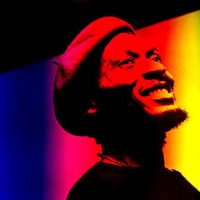
But another reason for its fascination is the performance given by reggae singer Jimmy Cliff as the hero.
Although a non-actor, Cliff was chosen for the role by director and writer Perry Henzell after seeing a cover of one of his albums. The pictures on the front and back covers were so contrasting in style that he imagined he saw two distinct personalities there. And after screen tests Jimmy Cliff was given the job.
“Much of the film was ad-libbed,” he explained. “We had a script but we didn’t stick to it particularly. I just said what I thought should be said.”
And at some times he was able to bring his own particular beliefs into the parts, which in some sense, at least, reflected his own early struggles as a singer-songwriter.
“There’s one particular scene that I’m particularly pleased with,” he says. “Someone is saying to me I’m a dreamer, but I answer saying she’s a bigger dreamer because she’s religious and always thinking of milk and honey in the sky, when I’m saying it should be right down here on earth.
“So many people, particularly in Jamaica, where there is every sort of church, still have this spooky idea of dying and going to Heaven. It’s like a brainwashing process. I don’t think they should sing hymns in church at all, because they help to excite the emotions – which cause illusions. I used to see them all getting worked up and ‘getting the Spirit’. Getting all spooked up, you know.”
Jimmy Cliff has been well known in both Britain and the West Indies for some years. But with The Harder They Come reputedly doing business like no film has ever done in Jamaica, he’s suddenly become a celebrity in his home island.
We met in London a few days ago, shortly before he left on a promotional trip to New York. He’s a quiet, virtually taciturn man of 25, strikingly handsome, and was, at our meeting, surprisingly relaxed.
I say “surprisingly” because I’d been forewarned that he was in fact going through an anti-white period in his life, but when I put this to him, he denied it completely.
“No. I like it here. After all, I’ve been in England on and off for eight years. When I first came my agent booked me into a bed-sitter, but when the caretaker saw me she said that I oughtn’t to be there. Being just over from Jamaica and very green I didn’t know what she meant. Anyway, she said it was okay that I stayed so long as I didn’t let the landlord see me.
“But after a couple of weeks the landlord came banging on my door and gave me 24 hours to get out. Would you call that prejudice?” Now he avoids such confrontations.
He was brought up in the Jamaican countryside, outside Kingston, one of three sons and two daughters: “My father was a tailor, and we lived in the most desperate state of poverty that you can imagine. But because there is always food available in the country we never went hungry. I could always eat bananas and things like that.”
“When I was about six or seven I used to go and stay with my aunt, who had six sons, all of whom were much paler than me.” (He has a very black skin.) “In Jamaica you’re still made to feel resentment if you’re very black. It doesn’t come from the family, so much as from society in general. It’s much easier to get on if you have a pale skin.
“But while I would be staying with my aunt, my grandmother, who also lived there, would tell me how her grandmother had also been very black and had been a slave and had told her that black meant beautiful. I can remember that very vividly.” He was lucky, he thinks, to have such a grandmother.
At the age of about 14 he moved to Kingston to study radio and television at technical college, but dropped out after a year to begin his career as a singer and songwriter. He’s never done any other kind of work since.
I was desperate at first, and at one point I even conceived the idea of robbing a bank. But I never did it. When I made my first record I was only offered enough expenses to cover my bus fares to and from the studio so I turned it down. I wanted paying the full session fee or nothing at all. It was a matter of pride.”
He was 15 at the time, and although that record didn’t sell very well, his third record became a number one seller in Jamaica.
After another three hits he decided to try his luck in America and it was while he was in the States that he ran into Chris Blackwell, the man who had discovered Millie (My Boy Lollipop – remember?) and who first started the interest in West Indian music in Britain.
At Blackwell’s suggestion he came to England, and began to work from a base in London. So far he’s had two very big hit records here, Wonderful World and Wide World, while several of his songs have been hits for other artists.
In fact it is largely due to the influence of Jimmy Cliff that reggae music has become so popular, with both Bob Dylan and Paul Simon known to be keen admirers of his work.
“Reggae is a happy music. In Jamaica everyone is always smiling, and that is shown in the brightness of the songs. My influences have been calypso and rock and roll. When I was a boy we would sing those Harry Belafonte songs in the fields as folk songs. Then when I grew older the music became known as ska and then reggae.”
The film The Harder They Come has particularly strong political overtones, but so far as I can see there’s little of the militant about Jimmy Cliff. “Education,” he says. “That’s what is needed. That will solve everything.”
