May 2011
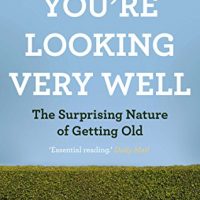
Happiness, it appears, peaks at the age of 74. So says a survey of 21,000 people, quoted in a new book on ageing by Lewis Wolpert anyway – which is something to look forward to.
Apparently if I look after myself, keep fit, keep my mind busy, have a positive outlook on life, think I’m younger than I am, eat my greens and am lucky with my genes, I could go on for years. And for those of a religious bent, or simply well off, things could be even better. Money matters. People in the richest part of London live about seventeen years longer than those in the poorest areas.
Quite how accurate that age of maximum happiness at 74 is, or even how that happiness was calculated, Professor Wolpert, wryly, doesn’t say. But looking around at friends of my own age and those a good bit older, there could well be some truth in it. There may be a muffling of deafness amongst some of them (I’ve been lucky there, the hearing’s terrific), but by and large they’re a contented and happy breed who don’t think they’re old at all yet.
Not that the young understand that. To them old age begins at 65, other surveys suggest, and I would bet that to the really young at a much earlier age. I well remember when my wife’s cousin, then a student, told us about a chap who’d tried to get off with her. Did she fancy him, I asked.
“God, no!” She scorned. “He was your age.” I was then not yet 35. I didn’t feel 35. I don’t feel much older than that now.
Others obviously see me differently. When, while travelling on the London Underground recently, a very pretty young woman stood up and offered me her seat, I was almost insulted. Did she really think I was too old to stand? “Don’t be misled by the white hair,” I wanted to say. “That’s an inherited family thing. I was grey at 30. I’m quite young really.” I didn’t, of course. I just stood there, more athletically upright, admittedly, and smiled in fake amusement at her kind, but obviously mistaken assumption.
Age – it obsesses us, every day becoming both a blessing and a problem as the population of the Western world gets older. We’re all living so much longer. In 1900 male expectation of life in London was 42: by 1950 it was 51. Today it’s around 80. The number of people in the UK over 85 doubled between 1983 and 2008. And the figure is growing all the time.
I remember my grandmother being 70. She was an old lady. She died at 82, quite ancient, I thought then, but only the same age as a friend of ours was when she went on a trip to Antarctica recently. She’d sailed up the Amazon the year before.
She looks amazingly young, too, but isn’t that what we all want to do – stay young and, hopefully, beautiful? Indeed to many people beauty is only to be found in the young. To Professor Wolpert this is no surprise. Evolution, he says, wants us to reproduce and so has selected us to find young people most attractive, since they are the best reproducers. It’s all programmed in our unromantic cells.
But, as it is impossible to stay young, an estimated £57 billion are spent in the cosmetic industry every year by women, and to a lesser extent, men, desperate to mask their real age.
It was ever thus. Cleopatra used to put lactic acid on her skin to protect it from the dry desert heat, while both men and women in Ancient Greece were heavily into make-up. The fountain of youth was an unholy grail. I like the story of Roger Bacon, a thirteenth century Franciscan friar who wrote a book on ageing, suggesting it could be warded off by, among other things, inhaling the breath of a young virgin.
According to Professor Wolpert, Friar Roger may have got this idea from the Old Testament story of King David who, when he was getting on, liked to sleep between two virgins (without, of course, having sex) in order to restore his youth. It sounds a bit like a Biblical bunga-bunga party to me.
Then there was a chap called Juan Ponce de Leon who’d been with Columbus when he discovered the West Indies. Told by the natives there about a place to the north where the waters would restore youth to anyone who bathed in them, he set off to find it, only to discover Florida.
Considering the millions who now retire to Florida and the recent reports that there’s been an increase in sexually transmitted diseases in Miami in the over-sixties since the introduction of Viagra, perhaps he just got there 600 years too early.
It’s undoubtedly true that many of those of us of the Third Age, as it’s called, are now enjoying more active, fulfilled lives. In London’s Hyde Park there’s now a pensioners’ playground for keeping fit, while pilates and badminton are everywhere and golf courses log-jammed with legions of the grey, the bleached and the bald. Then there are classes in well…just about everything you can think of. While in Japan there’s even porn for the elderly.
All of which is splendid for some. There is a reverse side, however. We call it ageism, that prejudice that routinely, often thoughtlessly, dismisses those over sixty as “past it”, that shallow thinking that sees only enterprise and creativity in the young.
This is quite fallacious. Beethoven, Michelangelo, Bach, Rembrandt, Titian and many others who created the beauty of our world did some of their best work in their later years. They were geniuses, yes. But is it not everyday evident that many elderly, and I mean those in their eighties, have accumulated wisdom and are often better at solving problems than those younger? Until the day she died at 92 my mother could beat me at Scrabble.
Yet how do we casually in conversation caricature the old? Sadly, as comic “grumpy old men” and “silly old bats”, a view which partly comes from television, and is ever magnified by that medium. In a survey of prime time US television it was found that only 3 per cent of characters were over 65.
British television is better…slightly. Yet, while many more older people watch TV than younger ones, most programmes would appear to reflect the reverse.
Of course ageism in the UK is still institutionalised by the mandatory age of retirement at 65. Retirement is splendid for those who want it and can afford it, and obviously necessary for those who can’t adequately fulfil the demands of their jobs any longer. But to others who want to work on, it’s a worry.
While some people may feel cheated that they will have to work longer for their pensions, as it becomes economically necessary if the country is to support a population that lives ever longer, work can be a contribution to good health. I dread the thought of ever retiring.
Many people into their mid and late eighties are in good condition, but we know it won’t always be like that. Wear and tear will get us all in the end, which is why we’re so terrified of senile dementia, with 20 per cent of the over eighties believed to be suffering from some form of it.
There’s long been a vague belief that some primitive and ancient societies revered their elderly more than we do, the children of the old who so often shut our frail, depressed or muddled in care homes and try to forget about them: out of sight, out of mind.
But that’s only partly right. While the wisdom of the elderly may have been prized, or at least listened to, in the good times, when societies got close to starvation, it was the old who were often sacrificed so that the young might survive.
We won’t do that in these enlightened times, but the breakdown of the extended family and the potential economic hazards facing us hardly bodes well for the future of our oldest people.
And, though it seems impossible when we’re young and beautiful and healthy, we’ll all be old one day.
(You’re Looking Very Well: The Surprising Nature Of Getting Old by Lewis Wolpert is published by Faber and Faber.)
