Mail on Sunday January 23 2011
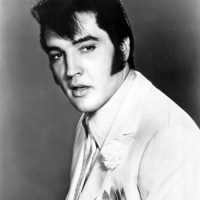
One December afternoon in 1956, Elvis Presley at 21 was cruising in his new Cadillac around Memphis, Tennessee, showing a new girl friend his home town, when he spotted a gathering of cars outside a small, single storey building he knew well. It was 706 Union Avenue, home of Sun Records, from where he’d leapt to world fame in less than a year. He pulled over. So many cars could only mean one thing. A recording session must be taking place. It was time to look in on old friends.
At first he chatted with Sam Phillips, the owner of the studio, who, with his office manager and lover, Marion Keisker, had discovered Elvis before selling his contract just twelve months earlier to the giant RCA Records. In that year Elvis had had six million-selling hits, two number one albums and made his first film, Love Me Tender.
Like a “golden boy” going back to his old school, after talking to Phillips, Elvis joined the musicians who were taking a break from recording. They included Carl Perkins, a young, unknown, blonde pianist called Jerry Lee Lewis, and, a little later, Johnny Cash. Then making his way over to the piano Elvis began to play and sing the Fats Domino hit Blueberry Hill.
Quickly the others, who must have been awed by his success, joined him with guitars and harmony, while Sam Phillips, never one to miss an opportunity, called the local daily newspaper suggesting they send a photographer to capture the moment. He also switched on the tape recorder. “I thought, man, just let’s record this,” Phillips would later say. “This is probably an occasion, and, who knows, we may never have these people together again.”
They never did, but the result that afternoon was a jam session which was to become legendary. Known as the Million Dollar Quartet, after Elvis’s girl friend of the day joked that the four should become a quartet, it was a moment in rock and roll history that I’d heard about for years before a short bootleg album appeared in the early Seventies.
And here I must declare an interest because rock and roll music, especially early Elvis, has been my passion, and later partly my career, since I was a schoolboy in the Fifties. To this end I was able to visit Memphis several times and interview not only Johnny Cash, Roy Orbison, Carl Perkins and record producer Sam Phillips, but also Elvis himself, and so many of those who came after him, John Lennon, Paul McCartney, Keith Richards and Bob Dylan.
Actually the first bootleg album I heard of the Million Dollar Quartet was little more than a fragment. Only after the death of Elvis in 1977, when his Graceland home was scoured for any private recordings that might have a commercial value and three reels of Sun tapes were unearthed, was the full session heard again – a treasured recording which has now formed the basis of a new West End show, Million Dollar Quartet.
Available on CD, and now due for a resurgence in interest, those original tapes reveal two hours of the young stars gathered around the piano chatting, singing and playing snatches of over forty songs. There’s shared appreciation and singing of Chuck Berry’s latest release, then blues, spirituals, country ballads, current hits, several gospel hymns and Little Richard’s Rip It Up. “Well, it’s Saturday night and I just got laid…” sings Elvis, giggling as he makes the lyrics somewhat more earthy.
They were fooling around, but, they though they didn’t know it, Elvis and friends were leaving for posterity a master class in how the melding of styles had created their branch of rock and roll music. Years later the Beatles would be copying their arrangements in the Cavern.
And it’s that moment in popular music history in 1956 that the show Million Dollar Quartet brings back to life – a show that began life as a few pages in the book Good Rockin’ Tonight by two English rock devotees Colin Escott and Martin Hawkins.
“I got a call out of the blue from film director Floyd Mutrux in 2000 saying that he thought this jam session could be a show,” Escott, now 59, explains from his home in Nashville, the country music heartland of America to where his obsession as a rock archivist and author eventually led him. “I knew who Floyd was because he’d written and directed American Hot Wax, which I think is the best rock and roll movie ever. So we set about writing a show based on that day in Memphis.
“Everything takes longer than you expect, but in 2006, after countless rewrites, we opened at a theatre in Florida. I couldn’t be there at the first night, but I went a few days later and saw a queue outside the booking office. I thought, ‘maybe we’re on to something here’”. They were indeed. There are now productions in Chicago and New York, with the London opening on February 28.
Dramatising that single occasion as the basis of a show, when Elvis returned to his roots, before he became too big and too remote to play with anybody else, was an inspired idea, one which, to be absolutely honest, I wish had occurred to me. And it’s absolutely right that it should put Sam Phillips at the centre of everything.
Because Phillips, the young radio engineer who in 1950 had invested his meagre savings into his own recording studio where people could walk in off the street and make a record for themselves, was the catalyst behind all his young stars’ careers and much that followed in popular music over the following decades.
“I would tell people they were welcome to come and try to do what they did best,” Phillips told me in 1973, standing in the wreck of his old studio which after he sold Sun Records in the Sixties had been turned into a motorcycle repair shop. “But I didn’t want anyone trying to sound like Nat King Cole or something they weren’t. I wanted their soul poured out on this damn floor.”
These days the grease and motorcycles are gone again and the Sun Records studio has had a make-over as a heritaged Memphis tourist site administered by the Elvis Presley organisation, to which fans flock in their annual thousands and occasional modern stars, such as U2, go to try to capture some of the old magic.
Back in the early Fifties, however, it was a shabby little self-built place, where grass grew between the paving stones outside and Phillips struggled to make a living by recording black blues artists and selling the tapes to record companies in Chicago.
Then one day in 1953 an eighteen year old Elvis stopped by and paid four dollars to record a song, probably just to find out what he sounded like. Phillips was out so Marion Keisker recorded him singing a Thirties’ country ballad, My Happiness.
“I’d noticed him outside with his guitar, too nervous to come in, and when he did he was very shy,” she told me during one of my visits to Memphis. “Anyway, I recorded him and took down his name and address, and, so that I’d remember what he looked like, I wrote ‘Timothy Sideburns’ alongside his name. I’d heard Sam say a hundred times that if he could only find a white singer who could sing with as much feeling as a black singer he’d make a million dollars, and I thought, maybe Sam should hear him.”
Phillips told me a slightly different version of events, mainly that he’d made that first recording, but his recognition of Elvis’s talent was what really mattered. “I gathered that Elvis lived in a very poor area and I saw in his eyes that same look of fear that was in the black man’s eyes, that he might be somewhere off bounds for the likes of him. I’ll never forget his look of amazement when he heard himself on record – amazement not at the way he sounded, but also that someone should be treating him with such respect.”
Some months later Phillips put Elvis together with two local musicians and before the evening was finished the boy, who had never sung in public, had made his first record, That’s All Right, Mama. “We didn’t do but three takes and we used the second. I was so delighted, I said, ‘Y’all have come off fantastic tonight, because if this isn’t good enough, then Lord, knows, I don’t know which direction to go in’. I knew we had something that wasn’t fish nor fowl, but that had tremendous excitement and abandon.”
Elvis had, of course, too much “excitement and abandon” to stay. By 1956 he was gone, leaving Phillips to record other young men now attracted to Sun by Elvis’s success and Phillips’s vision, people like Johnny Cash, who immediately had a hit with I Walk The Line, and Carl Perkins who wrote and sang Blue Suede Shoes.
So when Elvis saw the cars and called in on Sun for that pre-Christmas afternoon jam, when the studio, as Marion Keisker, who died in 1989, once told me “looked like nothing so much as a chicken coop nested in Cadillacs”, he already knew Carl Perkins and Johnny Cash – although Cash’s later assertion to me that they would frequently all join in on each other’s records may not have been strictly true.
Listening now to the fly-on-the-wall recording of that day, as everyone connected with Million Dollar Quartet show must have done many times, is like stepping into a time warp. At first Elvis, who would later be described by one of his friends as “the world’s worst pianist” sits at the piano, until, when given the opportunity, the cocky young Jerry Lee proceeds to give him a lesson in how it should be done. “The wrong man’s been sitting here at the piano,” we hear Elvis say as Lewis takes over.
“Well, I been wanting to tell you that all along. Scoot!” comes back Jerry Lee, never short of self-confidence. And off they go again, with Elvis maybe showing off a little bit, choosing most of the songs.
It was a moment when rock and roll was fun, young and innocent, and when none of those present had any idea of where it was going or where it would take them.
As with any group of friends there were probably little personal rivalries being played out, with, it is said, Johnny Cash, who was always jealous of Elvis, going off to do some Christmas shopping after the photograph had been taken – although he later denied it. While the very likeable Carl Perkins was no doubt reflecting that a few months earlier, while he’d been in hospital recovering from a car crash, Elvis had pretty well made his song, Blue Suede Shoes, his own. On the other hand was he just grateful for the additional large song writing royalties he would have been earning from the Presley record – and still is?
Whatever their personal feelings towards each other that day, these musicians were on top of the moment, talking about songs and records as only teenage boys and young men can. Soon we hear Elvis regretting that he’d missed out on recording the Pat Boone million seller Don’t Forbid Me, because he hadn’t been aware that a demo record of it had been sent to him. “It was written for me and it was sent to me,” he admits, “and it stayed over at my house for ages, man. I never did even see it.”
Before he starts demanding everyone listen as he raves about how he’d just been to Las Vegas (where he’d met the girl he was with) and seen the unknown young Jackie Wilson doing an impression of Elvis himself singing Don’t Be Cruel – and modestly admitting that Wilson had done it “much better than that record of mine. I went back four nights straight, man. I was under the table when he got through singing.”
He, the biggest star in the world, had become an instant admirer of another singer, with an enthusiasm that reminds me of conversations I had separately with both Bob Dylan and John Lennon after I’d interviewed Elvis and seen him on stage in 1969. Their questions to me were almost identical. What did he sing, they both wanted to know. “Did he sing stuff from his days at Sun Records? Did he sing That’s All Right, Mama, and Mystery Train?”
Playing again the CD of those four young men in Memphis over half a century ago as they tried to remember the lyrics of favourite songs and the keys to play them in, not only is the racial and cultural background from which they sprang illustrated, but also the religious.
That might surprise some, but church music, the way it was sung in the Baptist churches around Memphis, was always a rich seam in early rock and roll harmonies and characters.
The stories go that when Sam Phillips and Jerry Lee Lewis (who’d once played at Christian revivalist meetings, but who, ironically, is perhaps best remembered in Britain for Great Balls Of Fire, marrying his thirteen year old cousin and being forced to leave the country when that became known) began arguing about religion they could go on for hours, and recording sessions would have to be cancelled.
Not, I suspect, that religion plays too large a part in the stage version of Million Dollar Quartet, nor many of the hymns that were actually sung on that day. This recreation of the event is an excuse for a rock and roll celebration.
“Rock and roll has been done on stage before, but usually Broadway-ised” says Colin Escott, who has a new show about the Shirelles and Sceptre Records opening in New York in the Spring. “We wanted our show to be small and grungy, with the actors actually playing and singing and maybe making mistakes, just three or four guys in a garage, like it always was.”
In the case of Million Dollar Quartet it was four guys at the top of their professions and a brilliant record producer called Sam Phillips, who welded hepped-up, white working man’s guitar led country music with the local Memphis rhythm and blues of black musicians.
And, in doing so, created a style of rock and roll that has been copied and adapted ever since – from the Beatles’ early repertoire to Creedence Clearwater Revival and right on down through the years of “guitar, bass and drums” bands to Raising Sand, the 2008 Grammy Award winning album by Led Zeppelin’s Robert Plant and Allison Krauss.
“I hate to get going in these jam sessions,” said Elvis that day as the singing ended and he said his goodbyes to his old friends. “I’m always the last one to leave.”
Perhaps sadly for us, but even more so for Elvis, Sam Phillips, who died in 2003, was right in his prediction. A jam session like that, with those same musicians, never did get going again.
One thing is for sure, though: considering the wealth those four artists were to generate during their careers, they might better have been described as the Billion Dollar Quartet.
