Radio Times, March 29, 2011
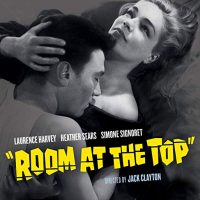
It isn’t often that the title of a novel captures the mood of the moment, but author John Braine’s naming of his first novel “Room At the Top” was absolutely timely.
Although written in the early Fifties, when it was first published in 1957 Britain was on the very cusp of change, and, with traditional class divisions having been dislocated by World War II, Braine’s ambitious working class character, Joe Lampton, was instantly recognisable. He wanted a “room at the top” is a small town society. How could he get there?
I was sixteen at the time and can remember this first person narrative about a young man-on-the make becoming an immediate best seller, its title quickly working its way into newspaper headlines and general conversation. “There’s room at the top for a bright lad like you,” went the knowing, jokey catch phrase. Today the line remains a well-worn part of the English language.
Despite the novel’s immediate impact – and its vivid descriptions of lust and sex three years before the Lady Chatterley’s Lover trial smashed the censorship barricades certainly helped its notoriety – what we didn’t know then was that soon the bubbling general frustration that John Braine identified would explode and change the face of Britain.
The Fifties was a time of drab austerity. Rationing was slow to finish, even mildly provocative sex scenes were invariably blue-pencilled in books, films and theatre, few girls were encouraged to go to university, and the lives of the working class rarely written about or dramatised.
And brilliant as the books of Graham Greene and Evelyn Waugh may have been, they were also snobbish. Enid Blyton, then the most popular writer for young people, only wrote about children who went to boarding schools.
Then suddenly there was Joe Lampton, John Braine’s central character (I hesitate to call him a hero), a working class pudding of ambition, a bolshie, unsubtle, randy, chip-on-shoulder, straight talking Northerner, reinventing himself through sex and social climbing, dreaming of an Aston Martin, a girl with a Riviera suntan and a thousand a year.
He, like the university educated but lower middle class Jimmy Porter of John Osborne’s play Look Back In Anger, which had been first staged just a few months earlier, were the original angry young men who spoke in everyday language about a repressed Britain. Interestingly both characters would marry above the social strata into which they’d been born. Posh tottie ever was a magnet.
Room At the Top and Look Back In Anger, as well as Allan Sillitoe’s novel Saturday Night And Sunday Morning and Shelagh Delaney’s stage play A Taste Of Honey, all of which became successful films, were together seen as part of a late Fifties trend, and usually referred to as “kitchen sink” dramas.
But that description, suggesting sordidness, surely missed the point.
Yes, they were mostly about the problems of ordinary people, but their shared over-riding theme was frustration and anger at the lack of opportunity which still governed a Britain where people still “knew their place”, especially in the back streets of the Northern industrial towns.
Yet even as Braine, Oxborne and Sillitoe were writing, change had begun. A generation behind that of Braine, young people weaned on the post-war Welfare State, were, to the backbeat of rock and roll music, starting to see a new kind of future just over the horizon. In hindsight we now call that future the Sixties.
Due to a massive piece of social engineering in the shape of the 1944 Education Act, it had become possible for children – war babies and baby boomers, if you like – from modest homes to go to grammar schools and on to university, all at the state’s expense – which must seem like Utopia for today’s students.
Their parents had lived through a depression and a world war but the youth of 1960 would reap the benefits in a time of peace, full employment and every increasing prosperity. “You’ve never had it so good”, Prime Minister Harold Macmillan said in the election of 1957. It was undeniably true, and it was going to get better.
Suddenly new opportunities were arising for the nations Joe Lamptons, as, by the Sixties, the universities and art colleges began producing a new class of meritocrats. This was most obvious in the headline grabbing arts, where new rebels were to be found in the shape of art student John Lennon (he even made reference to the phrase “room at the top” in his song Working Class Hero) and university drop-out Mick Jagger, in the satirical mockery of television’s That Was The Week That Was and Jack-The-Lad movie heroes like Michael Caine’s characterisation Alfie.
Then there were the working class photographers like David Bailey and Terence Donovan, grammar school fashion designer Mary Quant and the Bradford born artist David Hockney.
Joe Lampton had railed against the lack of opportunity for people from his background. Suddenly opportunities were everywhere, as young people with regional accents ascended quickly though the professions, even into the Civil Service, those local government “zombies” who Lampton so derided for their lack of enjoyment of red-bloodied life.
Indeed by the mid-Sixties, the class attitudes that had seemed impenetrable barriers just a few years earlier now looked like residues from the dark ages – and not least for women. Fear of pregnancy had always hung like a guillotine, but armed with the Pill which went on sale in 1961, young women could for the first time enjoy sex without fear of pregnancy.
And as working opportunities continued to increase, it was possible for a young woman to live a new, independent, modern life that had been suggested, though not enjoyed, by the unhappily married Alice, Joe Lampton’s lover, in Room At The Top.
It’s unlikely that John Braine envisaged the changes that were to come. But he saw more clearly than most the pent-up frustrations, continuing class unfairness and sexual repression which were so very soon to become part of the bleak history of his time.
